Australian Commonwealth Naval Forces (Mar 1901 to Jul 1911)
The Australian National Flag (blue ensign) quickly became the ensign of the newly formed Australian Commonwealth Naval Forces, a federal fleet which combined into one service the ships of the former six Australian colonies which in 1901, were constituted as States of Australia.
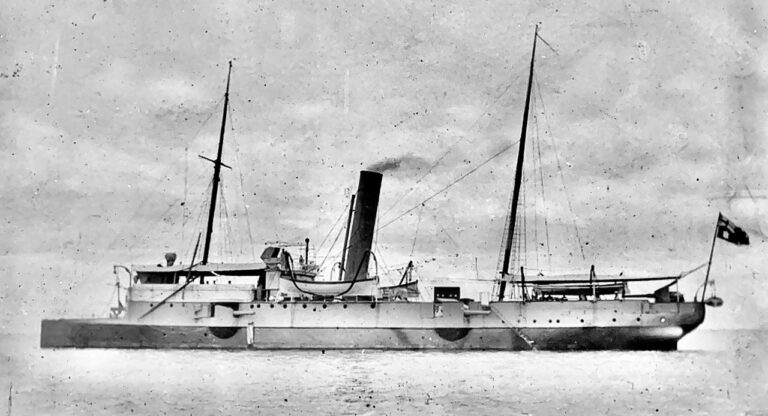
1902, South Australian waters: HMAS Protector, a Commonwealth Naval Forces ship wearing as her Ensign at the Ensign Staff the Australian Blue Ensign (Australian National Flag 1901-03 star pattern) with six pointed Commonwealth (Federation) Star.
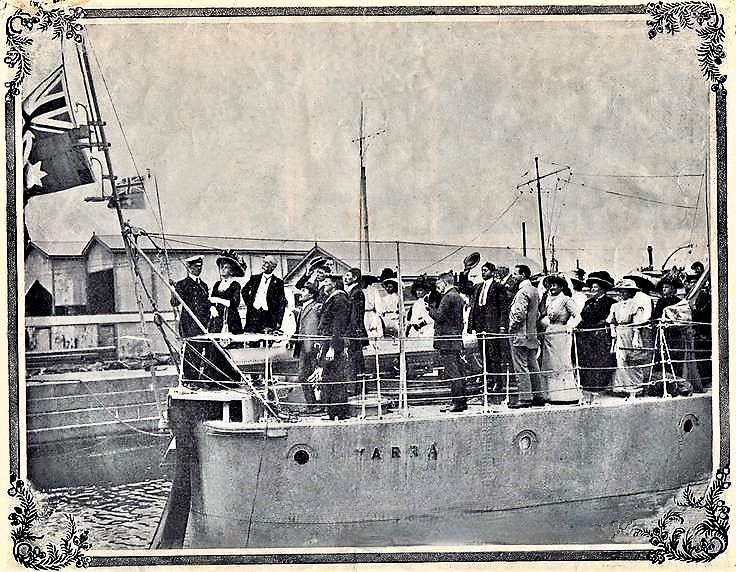
Flag raising ceremony aboard HMAS YARRA I with HMAS PARRAMATTA I in the background, at Port Melbourne, on 10 Dec 1910 (or within a few days after) . The Australian National Flag is hoisted as the ship’s Ensign, presented by the Mayoress of Richmond (Mrs Lloyd Davies) and her team of patriotic women of the City of Richmond, Vic.
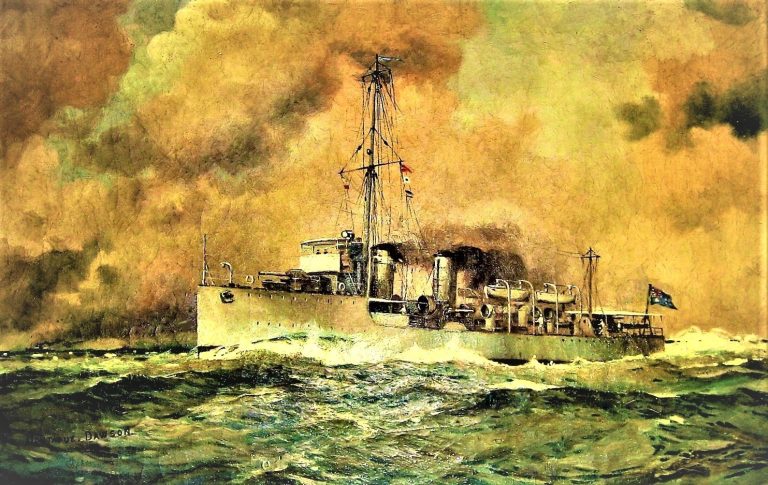
Painting of HMAS Paramatta of the Australian Navy, flying the blue Australian National Flag, prior to Jul 1911.
On 10 Jul 1911, the Commonwealth Naval Forces were granted royal status by King George V and became the Royal Australian Navy, which adopted the British White Ensign and later the Australian White Ensign as its flag.
1902 – Feb: Breaker Morant and Lieutenant Handcock’s joint grave
Lieutenant Harry Harbord “Breaker” Morant (1864–1902) and Lieutenant Peter Handcock (1868 -1902) were Australian soldiers who served in the Boer War in South Africa. They were executed by Imperial Military Command for murdering Boer prisoners.
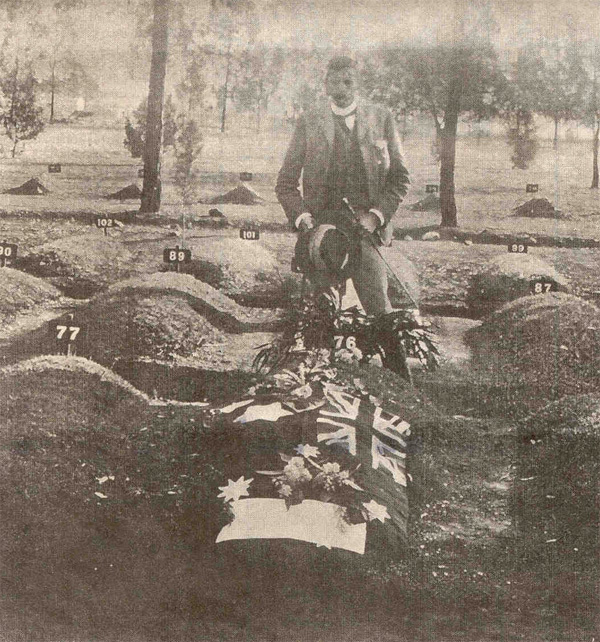
1902 – Feb: Breaker Morant and Lieutenant Handcock’s joint grave at the Church St Cemetery, Pretoria attended by Major James Thomas who was their defence lawyer.
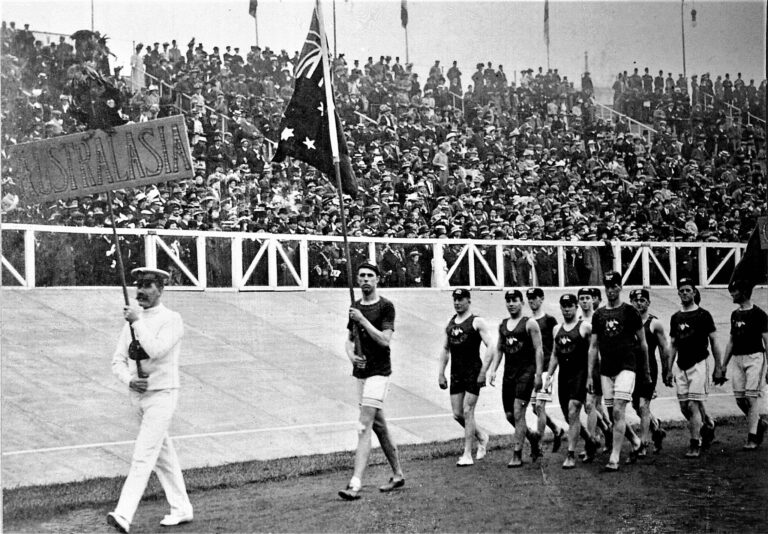
1908: London Olympics
Australasian (Australia and Zealand) Olympic team at the 1908 London Olympics
1908 and 1911: Australian Army
The Australian Army in 1908 and again in 1911 confirmed in their official publication, Military Orders that the blue Australian Flag was the only saluting flag for use by the Australian Army.
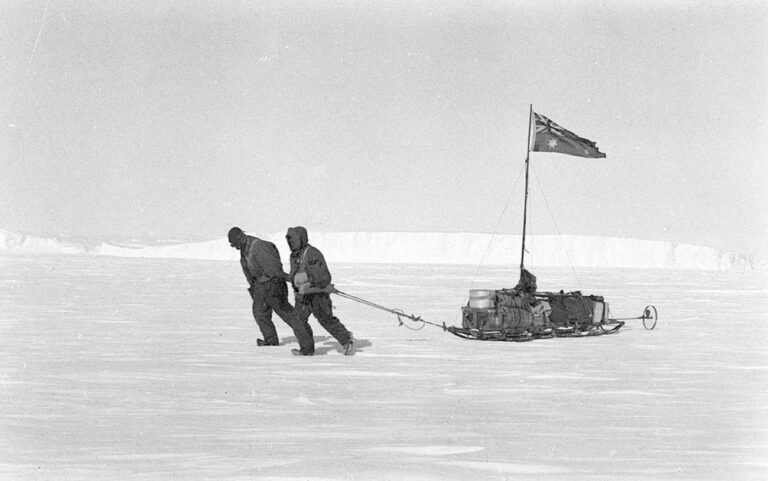
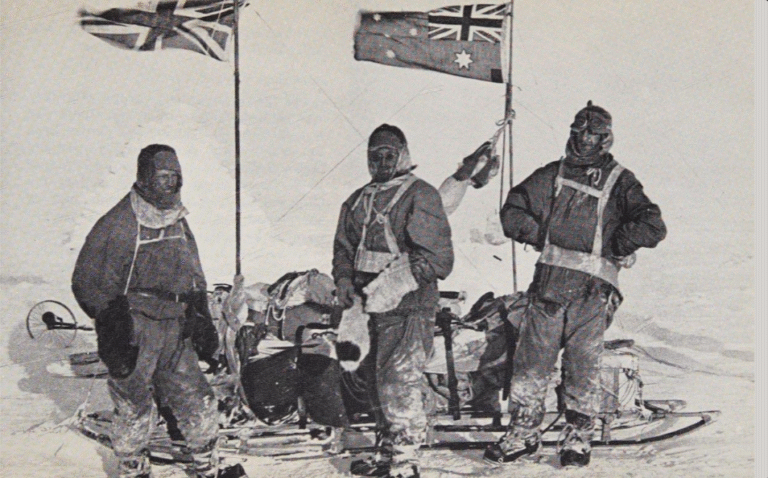
1911 – 14: Australasian (Australia and New Zealand) Antarctic Expedition
1911: Australasian Antarctic Expedition. Flying the Australian National Flag. Photograph by Captain Frank Hurley.
1912: Australasian Antarctic Expedition, Adelie Land, Antarctica. Photograph by Captain Frank Hurley. Photographed are John George Hunter, biologist, Herbert Dyce Murphy, logistics, and Charles Francis Laseron, taxidermist and biologist. Flying the British and Australian National Flags.
1914 – 6 Aug: First use in war (WW1)
The flag is used for the first time in war (WW1) when flown over Queenscliff Fort, Victoria. The fort opened fire to prevent the German steamer, Pfalz, from leaving port. It was the first shot fired in the Great War.
1914 – 9 Nov: Australia’s first battle (a victory) in WW1
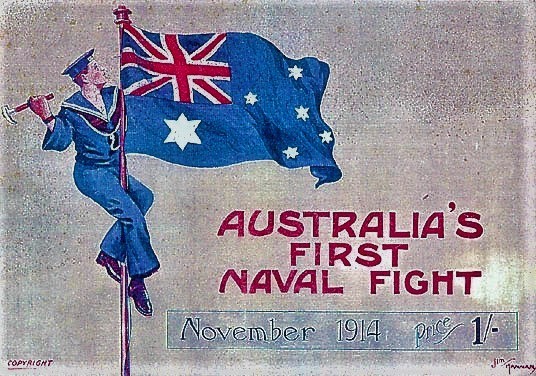
In Australia’s first battle in WW1, under the campaign to seize German New Guinea (now Papua New Guinea), HMAS Sydney destroyed the German raider SMS Emden. This event was commemorated in the following artwork, depicting a sailor nailing our colours, the Australian National Flag, to the mast, literally!
Painting of HMAS Paramatta of the Australian Navy, flying the blue Australian National Flag, prior to Jul 1911.
Artwork depicting the Australian National Flag in commemoration of Australia’s first battle in WW1
1917-18 – The Flag in WW1
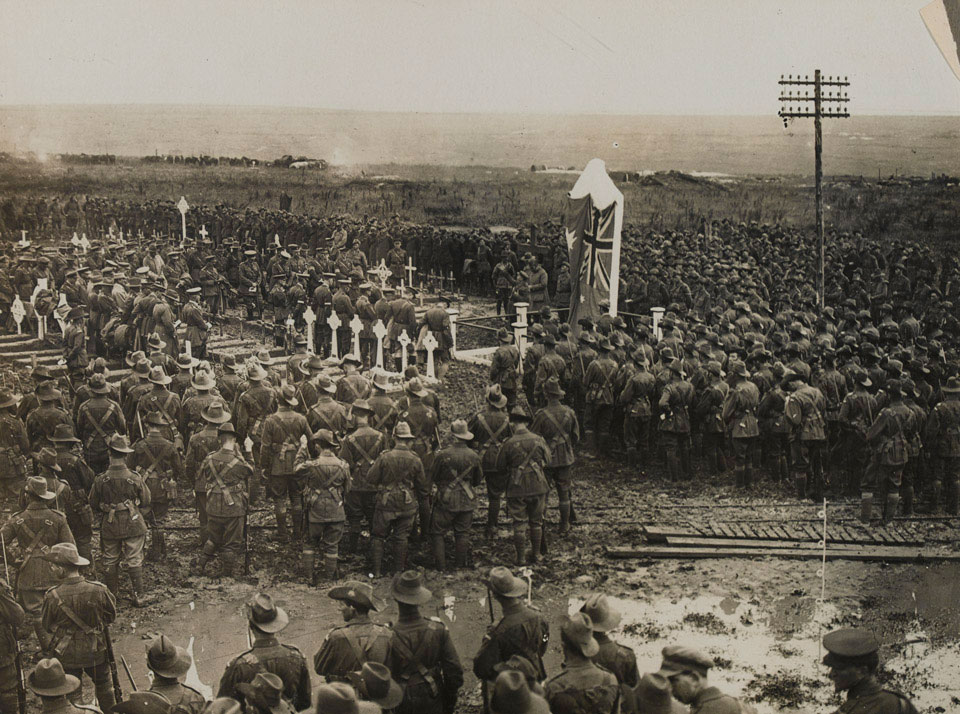
8 Jul 1917: Pozieres, Somme, France: A remembrance service held by General William Birdwood and the 1st Australian Division, commemorating men of the unit killed between July and September 1916 during the Battle of the Somme. The Australian National Flag hangs over the memorial, shortly to be pulled to unveil the memorial.
Note: The reader may see further detail in the photograph by zooming on their browser
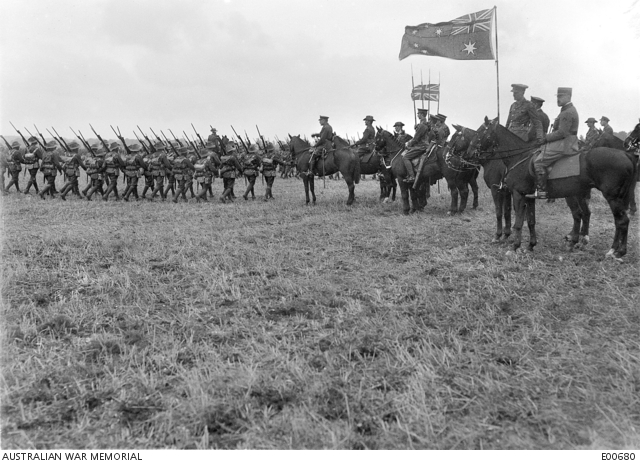
29 Aug 1917: Ebblinghem, Nord, France: Field Marshal Sir Douglas Haig reviews the 5th Australian Division. The Australian National Flag is flown.
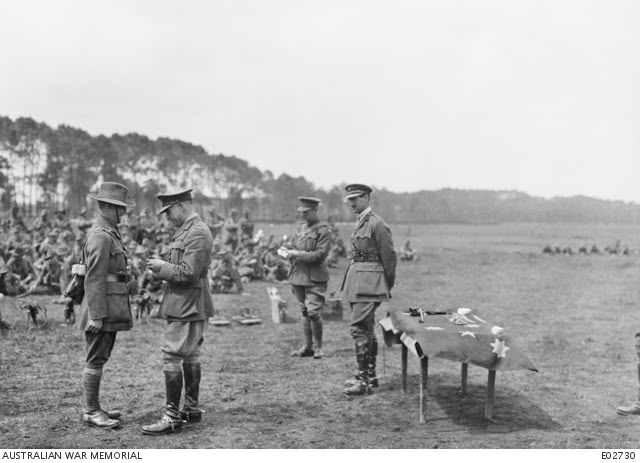
13 July 1918: General Sir John Monash awarding Sergeant Bill Ruthven the Victoria Cross for his bravery and leadership in action at Ville-sur-Ancre, Somme on the night of 19 May 1918.
1918 – WW1 Civilian Support from Australia
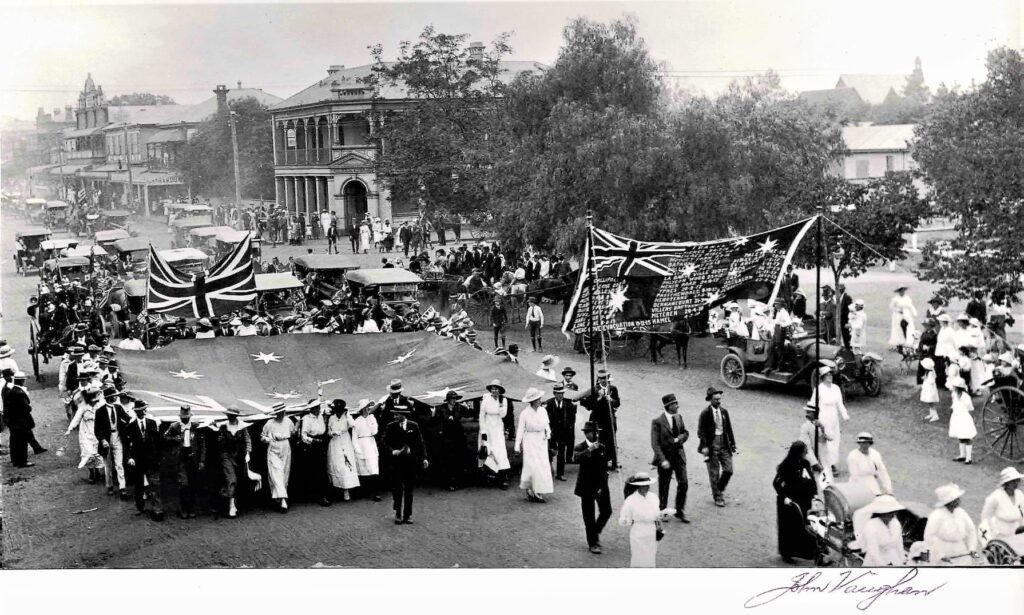
1918 (tbc): Warwick, Queensland: Australian National Flag is used for patriotic purpose to collect funds for the wounded and their families