As flags pre-date colour photography and printing, a common challenge in the study of flag history is interpreting colour from black and white photographs and illustrations.
In review of black and white photographs, use can be made of the relative shades as they appear within the image of the flag itself. In the case of black and white illustrations of the flag, many employ a method of shading called tinctures such that the tincture specifies the colour in that location within the flag. Instead of tinctures, some illustrators may have written a key associated with the illustration that describes which part of the flag is which colour.
In the context of the Australian National Flag, the common challenge is determining whether the flag in a black and white photograph or illustration is the blue or red ensign. This is because, while the Australian National Flag is the official flag of the Merchant Navy, it had a broader unofficial use throughout the first half of the 20th century.
Black and white photographs
In reviewing black and white photographs of the Australian National Flag, the following are guidelines to determine whether the flag is the blue or red ensign.
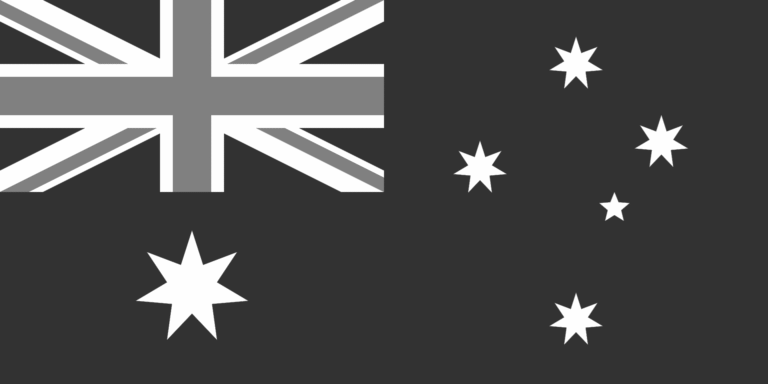
Blue ensign in black and white:
field (background) of entire flag (blue) will appear the same shade
centre of the crosses (red) will appear a different shade to the field (blue)
Blue ensign
Blue ensign in black and white
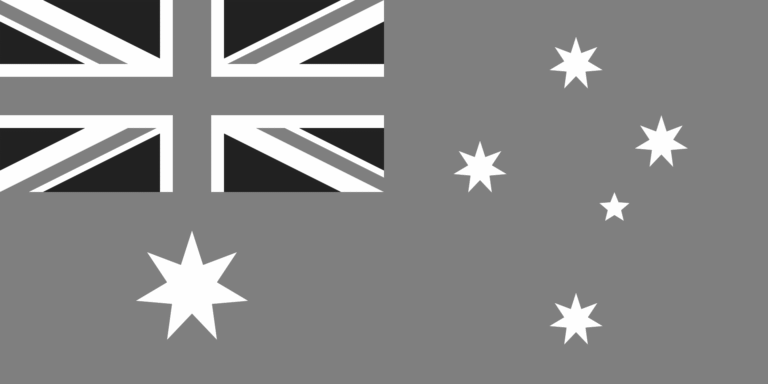
Red ensign in black and white:
field (background) of Union Jack (blue) will appear a different shade to the field of the rest of the flag (red)
centre of the crosses (red) will appear the same shade as the field of the rest of the flag
Red ensign
Red ensign in black and white
Note: In the above examples red translates to a lighter shade in black and white than does blue. However often in black and white photographs it’s the other way around, i.e. the red appears a darker shade than does blue. This can be due to factors such as the depth of the red and blue in the flag itself and/or characteristics of the photograph.
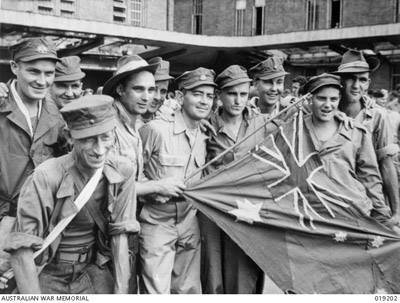
For example in the photo below of freed Australian prisoners of war in Yokohama Sep 1945, the men are holding the blue ensign, as shown by the consistent shade of the field over the whole flag, meaning blue, while the red in the crosses appears as a darker shade.
Black and white illustrations with tinctures
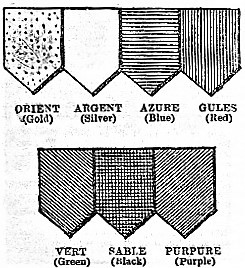
The following chart defines tinctures and the colours that they represent:
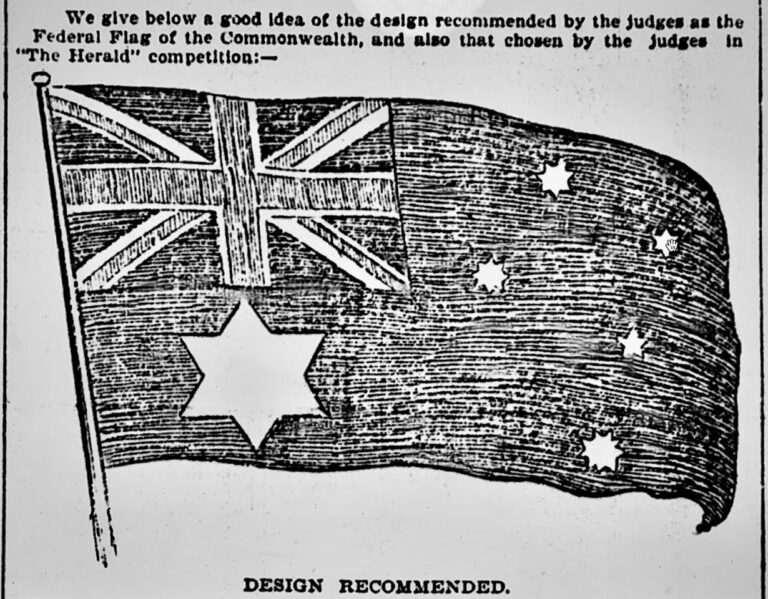
For example, below is an illustration, using tinctures, from the Melbourne Evening Herald on 2 Sep 1901, of the recommended design of the Australian National Flag.
The centre of crosses are shaded with vertical lines, meaning red, while the field is shaded with horizontal lines, meaning blue.